
What is Fan Service? The Ultimate Guide to Anime’s Most Debated Trope

Is fan service just cheap pandering, or a vital industry tool? Explore the history, types, and the real reasons why anime and manga need fan service to survive.
Inserting fan service into anime was never a rare phenomenon; in fact, many series have historically included it. Although some viewers dislike fan service “culture,” it is actually deeply tied to the manga and anime industry, you could even say they have merged into one.
This may be a hard truth for some, but fan service cannot be cut out from the industry; whether you like it or not, it will always be there. While I fully understand why some people can’t stand shows that are full of fan service, the reality is that the elements they dislike are often what allowed those stories to become anime in the first place.
Since fan service simply can’t be separated from manga and anime no matter how much we argue, it is important for us to learn more about it and discuss it openly. While it may seem useless to some, fan service has actually supported many authors in reaching their goals and helping their work become your favorite anime.
Fan service is a significant and sensitive topic in the anime community, and since it isn't going anywhere, let’s dive deep into it in this post. I won’t share any spoilers here, but please be aware that while I will provide examples, I am not saying those series are "bad." Including fan service isn't inherently a bad thing; in the end, it is just a "spice" for a creation, much like how ancient art sometimes contains nudity. Just because an author or production team includes fan service doesn't necessarily mean anything on its own, investigating what drives them to make that decision is far more important.

Source: 魔都精兵のスレイブ【公式】Official X account
What is Fan Service—and Why is Everyone Talking About It? :
Before we dive deeper into fan service, let’s first take a moment to define what it actually is. For the purposes of this post, the term "fan service" does not include adult anime. Although some people might group them together, in the anime world, fan service and adult anime are two very different things.
Adult anime, as the name suggests, is not meant for underage viewers; it is defined by explicit and erotic scenes. Since adult anime is essentially "adults-only" content, there isn't much to debate there. What we are discussing instead is fan service within general anime—the kind of content you may have encountered even when you were younger.
Since the rise of anime, various forms of fan service have always existed. Some series include "sexy" character moments, others include "panty shots," and certain Seinen works even include nudity. To give you some quick and easy examples: Dragon Ball, Naruto, Bleach, One Piece, and Fairy Tail are all titles suitable for a wide range of ages. Most of us have watched them since we were kids, yet fan service has been a part of them for a very long time.
These are the perfect titles to help clarify what fan service actually is and how it differs from adult anime. Dragon Ball, Naruto, and Bleach are series that fans worldwide have enjoyed as children and teenagers. While these are categorically not adult anime, they still feature "sexy" scenes, panty shots, and occasionally the classic "nosebleed" bathing scenes, as seen in One Piece.
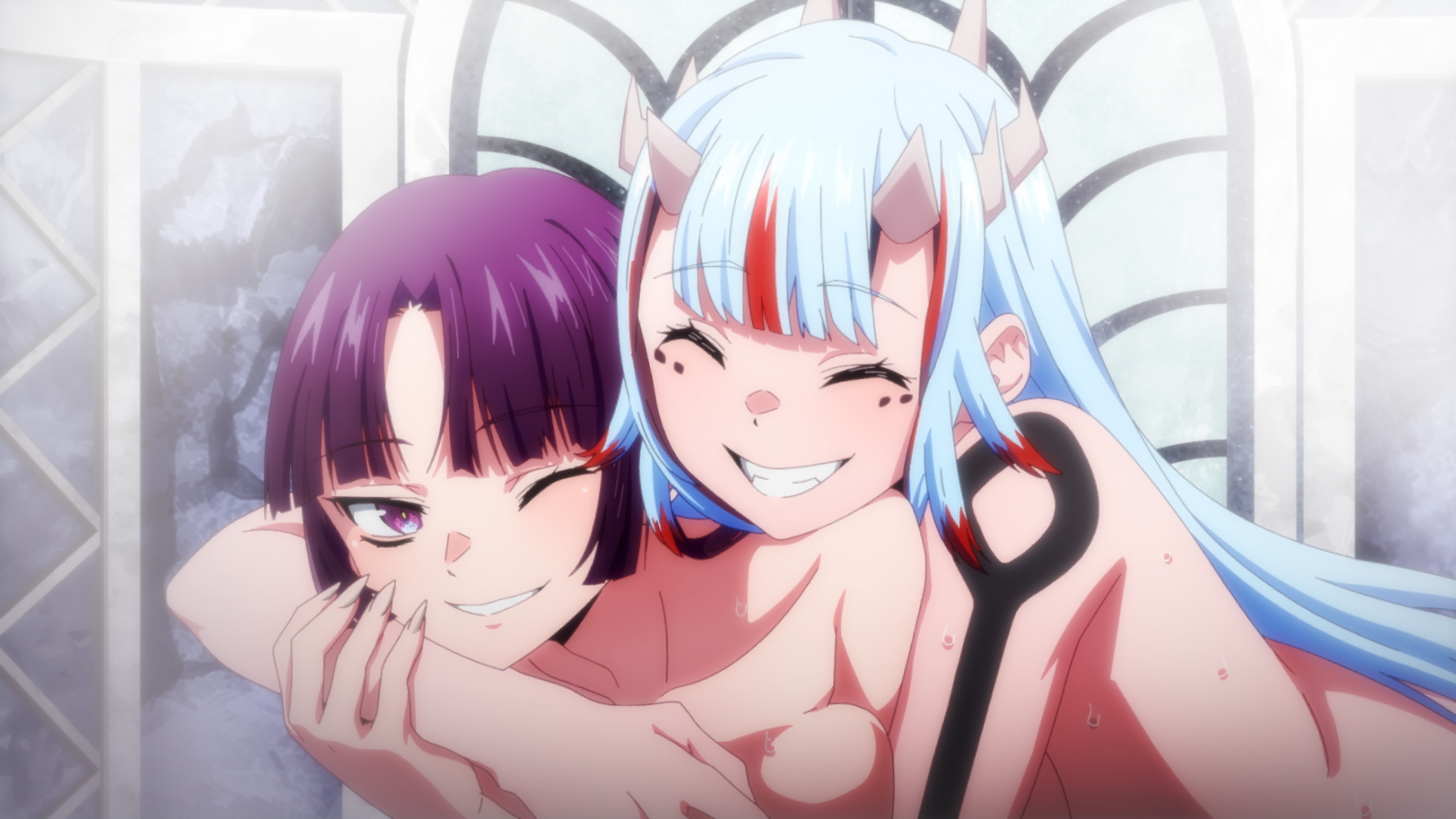
Source: 魔都精兵のスレイブ【公式】Official X account
There is actually another reason why I listed these specific titles. Some people believe that fan service is a technique used only by unsuccessful authors or "lousy" production teams—that it’s just a cheap way to "sell" a character’s body. However, these famous titles prove that this isn't true. The authors and production teams behind these series have achieved unquestionable, massive success in the industry. While I understand why some feel that fan service is just about selling a character’s body, in reality, it serves as a great "spice" for the work.
Let’s be honest: no matter how many years pass, how could Dragon Ball fans ever forget the interactions between young Goku and Bulma? No matter how successful Naruto became, fans won’t forget the "jutsu" Naruto created for fun or Jiraiya’s hilarious scenes. No matter how many arcs One Piece progresses through, those "nosebleed" bathing scenes remain a classic part of its flavor.
Beyond these legendary titles, let’s look at more recent hits like Fire Force, Dandadan, and even Chainsaw Man—all of which include fan service. These titles show us that including fan service isn't a sign of a lack of talent; even the most talented creators and teams choose to give the fans these moments.

Source: 魔都精兵のスレイブ【公式】Official X account
How is Fan Service Related to Anime and Manga—And Why is it Important? :
Now that we have a better idea of what fan service is, let’s talk about why it is so important for the industry. As many of you may have guessed, fan service is a powerful "spice" for a series and is primarily used to drive sales. This isn't a difficult concept to grasp, but what many may find hard to understand is the key factor that links sales to anime, manga, and even games.
The main reason fan service has always been tied to these mediums is buying power. Since the early days of the anime, manga, and gaming eras, the people who actually had the money to buy these works—whether they were manga volumes, games, novels, or light novels, were usually middle-aged "salarymen."
You may be shocked, but although games and manga may seem like things for children or teenagers, you will find a natural paradox when you look deeper. The paradox is that younger fans often don’t have enough money to buy these products. I am not saying that Japanese youth are poor, but when you compare children or teenagers to a "salaryman," it is obvious who has more disposable income.
This is actually why famous, long-running series like Crayon Shin-chan and even Doraemon (in the original manga) included things like panty shots or bathing scenes; they were originally works intended for adults. No matter how cute Doraemon is, in the beginning, the primary buyers were always salarymen with money to spend. This same situation applies to the Pokémon and Dragon Quest game series, as well as the incredibly famous Fate series. From a realistic perspective, they were all aimed at middle-aged customers who had the money to spend on this kind of entertainment.

Source: 魔都精兵のスレイブ【公式】Official X account
Even in the current era, with apps like TikTok, Instagram, and Facebook flooding youngsters' phones, how many anime watchers actually buy related products? Even if younger fans have money, why would they choose anime goods over the latest phones or other trends? From the beginning until now, the paradox remains: although many works are aimed at younger audiences, the people who truly invest their money, effort, and time are often middle-aged adults seeking this kind of entertainment.
As viewers, we can have discussions or even heated debates about fan service, but when you look at it from the perspective of an author or a production team, it is hard not to choose a "safety insurance." While fan service might lead to some negative reviews, the reality is that it works. Series like Kakegurui, Prison School, High School of the Dead, and High School DxD have proven that this marketing strategy is effective.
It may seem hard to believe, but Yowa Yowa Sensei, Chained Soldier (Seasons 1 & 2), and Mistress Kanan is Devilishly Easy have once again shown that this plan succeeds. As viewers, we can debate specific fan service scenes all we want, but if you are the author or part of the production team, you need something to ensure your "bet" doesn't cause you to lose everything.
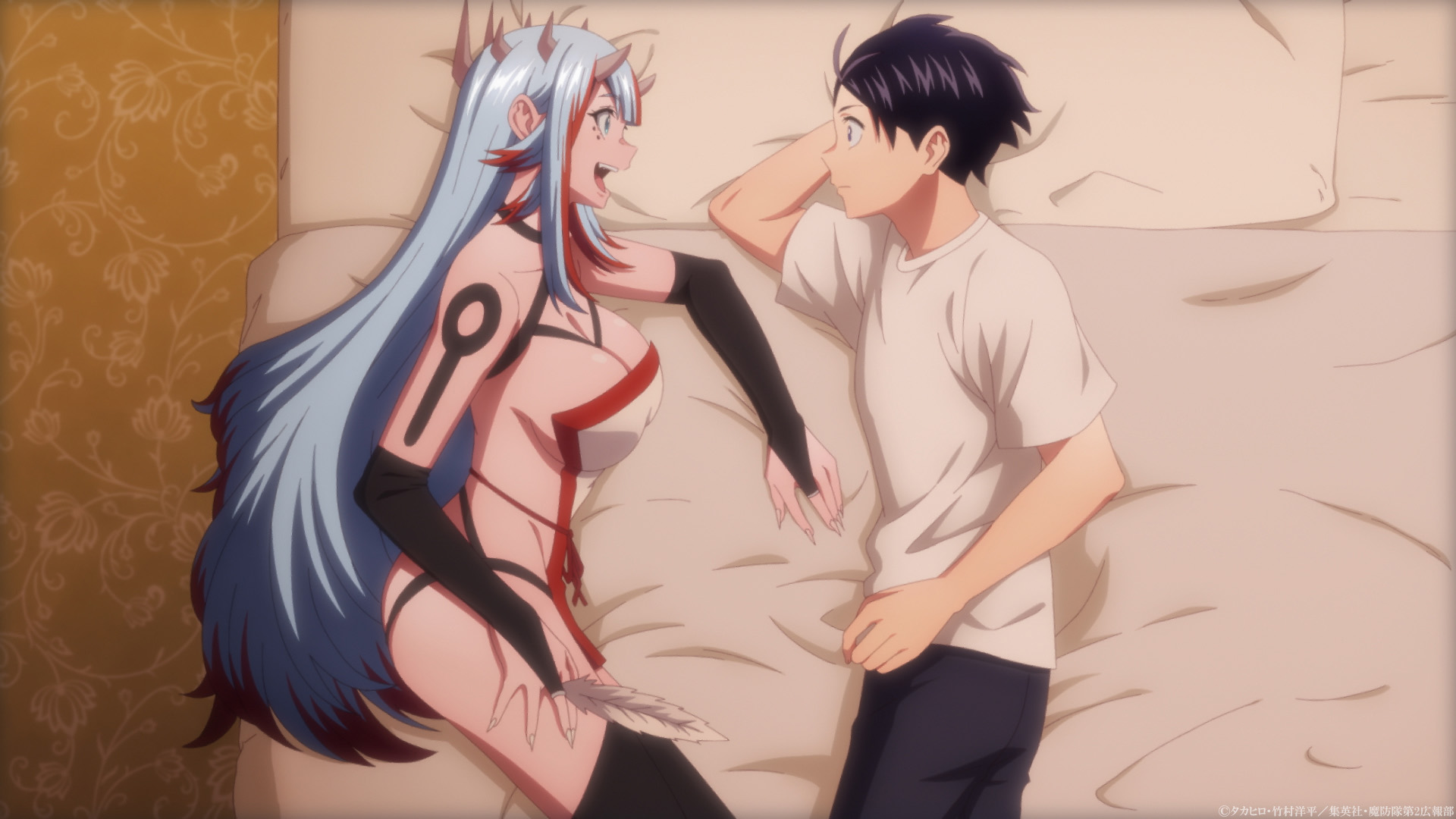
Source: 魔都精兵のスレイブ【公式】Official X account
How is Fan Service Related to Blu-ray Sales—and Why is it Important? :
With the rise of Netflix, Amazon Prime, Crunchyroll, and other streaming platforms, the number of anime viewers has increased significantly. This has led many to think that anime is simply about whether a show is "a must-watch" or "a skip," or whether it is a "hot" title. Many assume that a popular, must-watch anime will automatically earn a lot of money while less famous shows will easily be wiped out—but in reality, that is not the case.
For anime production companies, simply getting high viewership isn't enough, as they are not like Netflix or Crunchyroll, which are paid through subscriptions. For these production companies, the sales of BDs (Blu-ray Discs) are crucial, and they want to sell as many as possible. To give you an example: even a series as famous as One Piece, with its massive worldwide fanbase and endless arcs, still puts a lot of effort into Blu-ray sales, as they remain one of the primary sources of income.
A Blu-ray Disc (BD) is actually quite expensive. For example, the Fate/strange Fake BD Box is priced at approximately ¥41,800—definitely not a price point that a child or teenager can afford without serious thought. Although that price includes some exclusive Fate/strange Fake merchandise, let me share an interesting comparison: for ¥49,980, you can buy a brand-new Nintendo Switch 2. When you put those prices side-by-side, how many people would choose a single Blu-ray over the latest game console? More importantly, how many youngsters can afford a BD that expensive for every title they enjoy?

Source: 魔都精兵のスレイブ【公式】Official X account
The anime production teams know this well. They understand that the cost of a BD is high, so they always include extra materials to make the price feel more reasonable. However, no matter how many "goodies" are included, if the anime itself doesn't have scenes that make you want to watch it multiple times, why wouldn't you just buy a new game console instead?
Returning to the topic of fan service—no matter how you look at it, it is actually one of the most effective ways to solve this problem. As I mentioned, those who buy Blu-rays are mostly middle-aged adults, and including these "spices" helps build hype among that demographic. Of course, you could argue that series like Demon Slayer or Jujutsu Kaisen don’t need such things, but let’s look at the reality: how many companies actually have the chance or the resources to produce work on that level?
Certainly, there are ways to succeed without these spices, but the cost is usually incredibly high. You would need to produce endless high-quality animation, refine the plot multiple times, or as with Fate/strange Fake, spend years and years producing the ultimate final product. While there are other ways to do it, we have to ask ourselves: if you were the director or the lead producer, and there was a "spice" available that could help ensure high sales, would you truly abandon it in favor of a path that costs significantly more time and money?
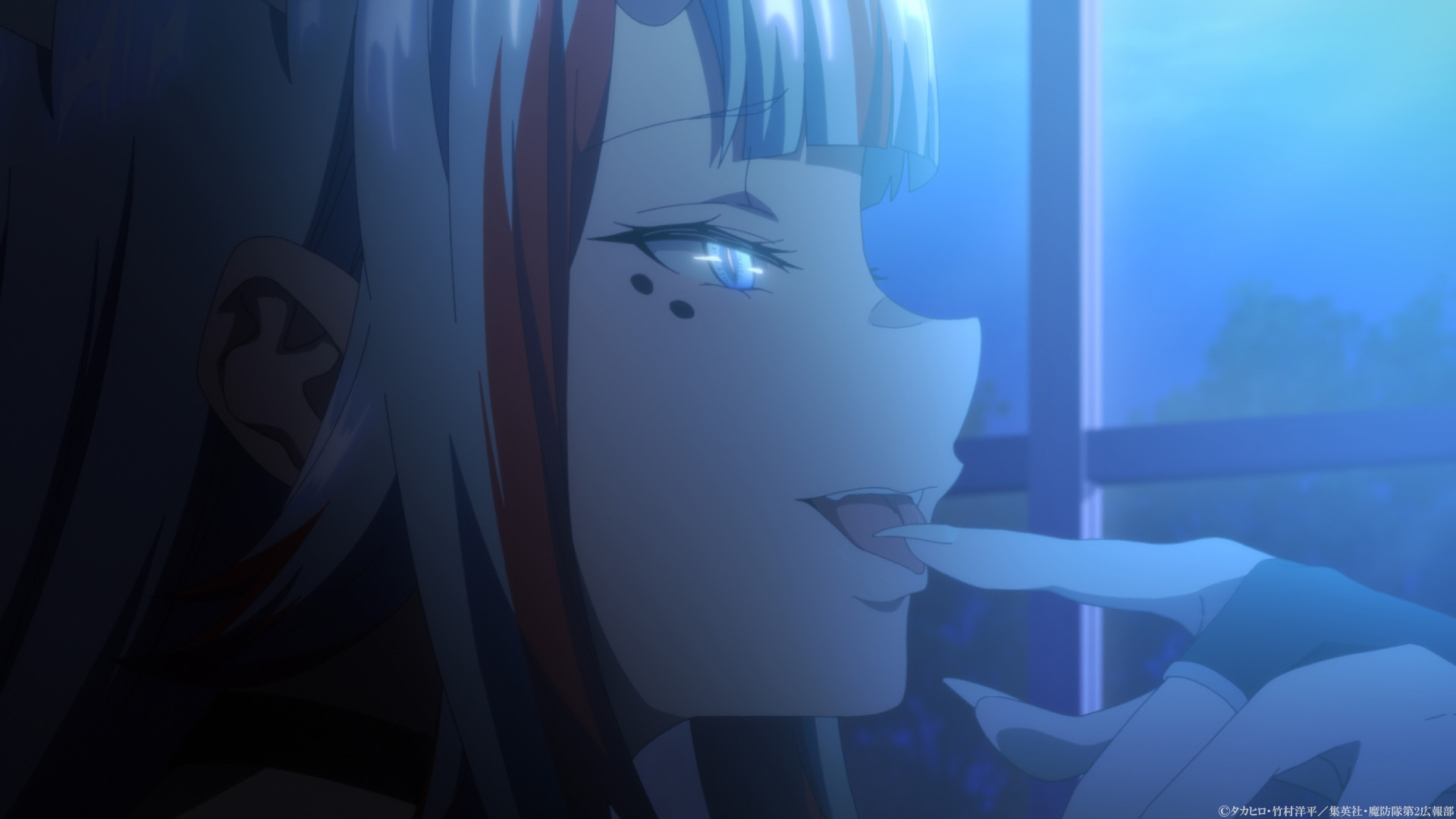
Source: 魔都精兵のスレイブ【公式】Official X account
Is All Fan Service for Men?—What About Fan Service for Women? :
As many have noticed, a large portion of fan service is created for a male audience, meaning the "sexy" scenes mostly feature female characters. This leads to an important question: is there any fan service made specifically for women?
Contrary to what some might think, fan service is not exclusive to men. In terms of highlighting the beauty of the human body, famous characters like Monkey D. Luffy, Portgas D. Ace, and Trafalgar D. Water Law from One Piece have long served as a form of fan service for female viewers. It may seem hard to believe for some, but in Japan, there is a massive female fanbase that loves these three characters specifically—and they are more than willing to spend money on high-quality merchandise featuring them.
In terms of bathing and "fan service" scenes, One Piece features several male bathing scenes; during the Wano Country Arc, we even see Oden’s "loincloth" (fundoshi) in the anime. Besides One Piece, the series Golden Kamuy frequently shows muscular men with their shirts off, and they are often seen bathing together as well.
As the number of anime viewers has grown, the number of female viewers has also increased significantly. Because of this, they have become a much more important demographic, and markets are being built specifically for them. It’s just that the number of male viewers is still currently larger, which can sometimes make it feel like fan service for women doesn't exist.
Even if some viewers don't notice it, characters like Kaidou from One Piece are essentially shirtless all the time, and the anime Grand Blue Dreaming (Seasons 1 & 2) features characters who are frequently fully naked. There is actually plenty of fan service for women all around us; if we look more deeply into the anime we watch, we might find many surprises intended for female viewers.
Here’s a YouTube video worth checking out.
Conclusion:
Thanks for reading! In this post, we’ve dived deep into the topic of fan service—a subject that has long been a "hot topic" within the anime community. Before you go, there is one last question to consider: while fan service usually serves as a marketing strategy, are there any authors who include these scenes simply because of their own personal tastes or "fetishes"? The answer is a definitive yes.
One such author is the world-renowned Eiichiro Oda, the creator of One Piece. In the "SBS" (Shitsumon o Boshu Suru) corner—a special Q&A column in the manga volumes—Oda has mentioned multiple times that he personally loves these scenes, so he includes them in his work. For example, he created the famous Amazon Lily Arc because he specifically wanted to tell that kind of story. While some might think he is an unusual author, it actually shows how honest he is with his work. Much like the ancient artists I mentioned earlier, he is simply drawing what is truly in his head.
Here’s a YouTube video worth checking out.
Thank you for reading! I will be publishing more content soon, including plot explanations, character deep-dives, and much more, so please stay tuned. While you wait for my next post, feel free to leave as many episodic reviews as possible, as there are plenty of challenges waiting for you on AnimeOshi! Plus, AnimeOshi has just launched a new Dropkick on My Devil! campaign, so everyone is welcome to join!
Here’s a YouTube video worth checking out.






COMMENTS (2)
No comments yet. Be the first to comment!