
From The Elusive Samurai to The World Is Dancing: Understand History with Anime
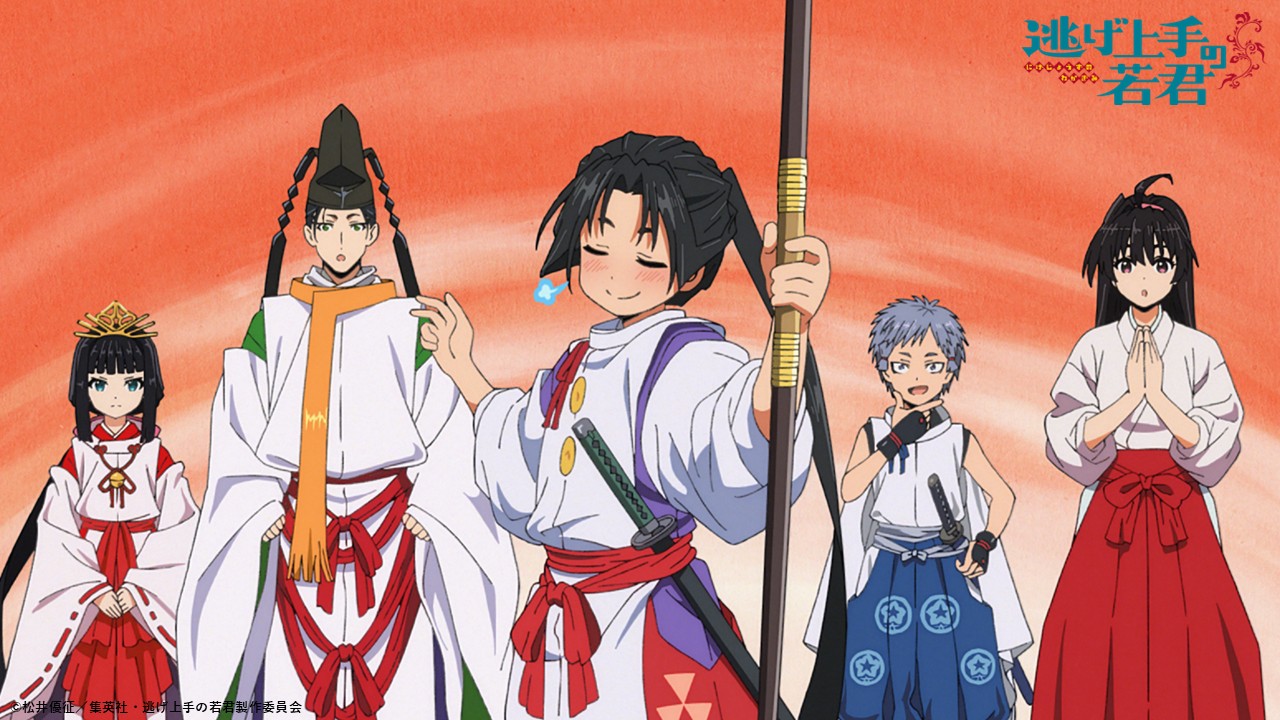
Most people don't realize The Elusive Samurai and The World Is Dancing share the exact same historical era! Discover 14th-century Japan through anime!
Summer 2026 is truly an incredible season for anime fans, with so many amazing shows waiting for us. From the latest entry in a legendary IP like The Ghost in the Shell, to the return of the king of rom-coms, The 100 Girlfriends Who Really, Really, Really, Really, Really Love You, and the great story of Jaadugar: A Witch in Mongolia, there are so many fantastic choices that almost none of them will waste your time.
Among all of them, two shows have been largely overlooked by most people: The Elusive Samurai Season 2 and The World Is Dancing. The Elusive Samurai Season 2 premiered its first episode on July 17, 2026, while The World Is Dancing premiered on June 29, hitting regional streaming platforms on July 2. If you haven't given these titles a shot yet, I strongly suggest checking them out!

Source: TVアニメ「逃げ上手の若君」 Official X account
Learn Japan's History Through Anime: The Elusive Samurai and The World Is Dancing
Having watched most of the Summer 2026 lineup, I can confidently say that both The Elusive Samurai Season 2 and The World Is Dancing are incredible anime. With compelling stories, intriguing characters, and top-tier voice acting, I thoroughly enjoyed them, and I have a lot I'd like to discuss with everyone.
I think most people notice these titles are set in the past just from their anime posters, since the main characters wear traditional Japanese clothing. However, I think most people failed to notice that they actually share the exact same historical background. You might think I'm exaggerating, but both titles are set in one of the darkest eras in Japanese history: the Nanboku-chō (南北朝) period.
The Nanboku-chō (南北朝) period, also known as the Northern and Southern Courts period, spans from 1336 to 1392. As shown in both The Elusive Samurai and The World Is Dancing, it was truly one of the darkest eras in Japanese history, largely due to a brutal civil war fought between two rival imperial courts.
To be honest, I'm not that familiar with Japanese history, unlike Chinese history, which I know through series like Kingdom. However, The Elusive Samurai and The World Is Dancing really sparked my interest in this era, showing what it was truly like to live through that devastating civil war. I think many non-Japanese fans are in the same boat: we might recognize China's darker historical periods, but these two shows offer us a fascinating glimpse into a completely different side of history.

Source: TVアニメ「逃げ上手の若君」 Official X account
How the Nanboku-chō Period Begins: Hojo Tokiyuki (北条時行) and The Elusive Samurai
Before we dive in, I know what you might be thinking. While both The Elusive Samurai and The World Is Dancing are adapted from manga, and I have read The Elusive Samurai manga, I will not be sharing any manga spoilers here, so please rest assured! However, I will be referencing events up to the latest anime episodes. If you haven't watched them yet or want to avoid anime spoilers, please turn back now!
I think most people either forgot or didn't pay much attention at first, I certainly didn't! But the very beginning of The Elusive Samurai actually shows us what led to the civil war. Even though Hojo Tokiyuki is the main character and has a cute shota design that makes us naturally root for him, his father was actually far from a wise or capable ruler.
Towards the end of the first episode, we get those brutal yet iconic scenes where Hojo Tokiyuki and his family are betrayed. Most of his people are slaughtered, and even his elder brother is kidnapped. It is definitely the worst day of Tokiyuki's life, and I really feel pity for him after seeing him lose everything in just one night. This tragedy kicks off the story of The Elusive Samurai and directly mirrors the real history of the Nanboku-chō period.
I doubt I'm the only one who felt this way, but at first I truly thought Hojo Tokiyuki was a fictional character, especially since he starts his revenge journey at just 8 years old! However, I later discovered that Hojo Tokiyuki was a real historical figure, and his quest for revenge actually began at that ridiculously young age. It's mind-blowing to realize that a real person's life was dramatic enough to feel like a manga or anime.

Source: TVアニメ「逃げ上手の若君」 Official X account
AnimeOshi — Meet Your Anime Alter Ego
One thing I've genuinely been enjoying on AnimeOshi lately, their Avatar System. You get to build your own custom chibi-style anime avatar, and it shows up across your profile and every review you drop. It's such a fun way to express yourself as a fan, and honestly, it makes the whole reviewing experience feel way more personal. If you're into anime and haven't tried it yet, what are you waiting for? Go make your avatar.

The Dramatic Life of Hojo Tokiyuki: The Meaning Behind the Japanese Title
Hojo Tokiyuki leads a truly dramatic life, and the original title actually gives us a massive hint about the journey ahead. While the English title, The Elusive Samurai, can sound a bit abstract at first glance, the original Japanese title, Nige Jōzu no Wakagimi (逃げ上手の若君), makes it crystal clear what kind of story we're in for.
"Nige" (逃げ) means escape, "Jōzu" (上手) means skillful or good at something, and "Wakagimi" (若君) means young lord. Putting them all together, the title literally translates to "The Young Lord Who Is Skilled at Escaping." At first, you might think, "What kind of main character is that? He sounds so weak!" But this title is actually a direct nod to the real-life historical figure: the legendary Hojo Tokiyuki.
Since The Elusive Samurai Season 2 is currently airing and I want to avoid major spoilers, I encourage everyone to watch it and witness Hojo Tokiyuki's dramatic journey for yourselves! That said, I'll share one interesting detail: based on his real-life historical legacy, we can actually deduce where the story is headed.
What do I mean? Let me give you a great example: Qin Shi Huang from Chinese history. He achieved incredible feats, and Japanese manga often portray him in a grand light, like Ying Zheng (Ei Sei) in Kingdom or his depiction in Record of Ragnarok, where he's always shown as a cool, majestic figure. On the other hand, when Hojo Tokiyuki is described merely as 'Nige Jōzu', skilled at running away, and barely appears in mainstream works, we can already guess what kind of ultimate fate awaits him.

Source: 「ワールド イズ ダンシング」アニメ公式 Official X account
The Peaceful Side of the Nanboku-chō Period: Oniyasha and The World Is Dancing
While Hojo Tokiyuki and The Elusive Samurai show us the brutal side and political chaos of the Nanboku-chō period, The World Is Dancing, following its protagonist, Oniyasha, highlights a relatively peaceful side of the era. Don't get me wrong: it was still part of a dark and turbulent time, but society was beginning to find the stability and space for entertainment.
In The World Is Dancing, we still see women struggling to find food and endless wars, it is undeniably a harsh world for everyone. However, people are at least starting to embrace dance as a form of entertainment and a fresh way to view life. It is definitely a more hopeful environment overall. Since the story has just begun and Oniyasha is only starting his journey, I won't spoil any details, you'll have to watch it for yourself to see what kind of dance he discovers!
As someone who read the manga and is watching The Elusive Samurai, I was genuinely shocked to see a familiar family name pop up in The World Is Dancing. At first, I thought I must have misheard, it wasn't Hojo, but another prominent name that fans of The Elusive Samurai will recognize immediately. However, after doing a quick double-check, I realized my suspicion was completely correct.
The recommended watch order for these two series is to start with The Elusive Samurai and then move on to The World Is Dancing. Following this sequence will help you understand the historical context much better and make it far easier to remember all the key figures and clan names. However, watching them in this order brings a bittersweet realization: you'll soon notice that the Hojo name is nowhere to be found, which subtly foreshadows something major.
Here’s a great YouTube video worth checking out.
Conclusion:
Thank you so much for reading! I hope this post gives you a clearer picture of one of the darkest eras in Japanese history and helps you see how these two incredible anime connect. Having watched both series, I can confidently say that The Elusive Samurai and The World Is Dancing are absolute must-watches that are well worth your time!
Since both The Elusive Samurai and The World Is Dancing focus on one of history's darkest eras, they do include some unpleasant scenes, but after watching them, I think those moments actually serve as great spice for the stories. Just like in Kingdom, these harsh realities ground the setting in truth and make it so much easier for us to fully immerse ourselves in their world.
Here’s a great YouTube video worth checking out.





COMMENTS (0)
No comments yet. Be the first to comment!