





Death March to the Parallel World Rhapsody
Oshimeter
Synopsis
Meet Ichirou Suzuki, a 29-year-old programmer pulling brutal death marches at work, the kind where you debug games until your soul leaves your body. He passes out at his desk and wakes up in a fantasy world stitched together from the games he was working on, except now he's 15 and goes by Satou. Things escalate immediately when a horde of lizardmen shows up and he accidentally nukes them with an overpowered spell, rocketing himself to level 310. So now he's basically a god in a world that looks like an RPG, complete with a HUD, skill menus, and inventory screens. But instead of conquering kingdoms or fighting demon lords, Satou mostly just wants to sightsee and cook good food. This 12-episode TV series from SILVER LINK. and Connect leans into the cozy side of isekai. There's a growing cast of companions, a lot of world-building across different cities and cultures, and a surprising amount of time spent on meal prep and how sharing food brings people together. The tension isn't really about survival, but it's more about Satou hiding how absurdly strong he is while trying to live a chill life. If you liked the power fantasy side of Overlord but wanted something way more laid-back, or if Sword Art Online's game-world aesthetic appealed to you, this scratches a similar itch. It's comfort food isekai: light on stakes, heavy on exploration and vibes. Think of it as a low-pressure travel anime that happens to have RPG mechanics baked in.
Episode Guide
News
No news yet.
Characters
Ichirou Suzuki
A transported programmer, Ichirou Suzuki rapidly learns skills in a game-like world, mirroring his work.
Briner Justin
Arisa
Princess Arisa, formerly a Japanese slave, is now Satou's property.
Rial Monica
Zena Marientail
A rescued soldier from Ichirou's first village, Zena is a strong and independent woman.
Shields Julie
Tama
Formerly a slave named "Cat," Tama is a cat demi-human who considers Pochi her sister and later becomes Satou's slave, adopting the Kishreshgalza name.
McDonald Margaret
Pochi
Formerly a slave named "Dog", Pochi became Satou's slave, later adopting the Kishreshgalza name.
Karbowski Brittney
Liza
Former slave, freed after her master's death; now Satou's loyal servant.
Lauda Brittany
Lulu
Lulu, purchased with her sister, possesses Japanese heritage and is deemed unattractive by local standards.
Harris Jill
MANGA BRIDGE
This season covers Volumes 1-26 of the manga. Continue reading from Volume 27.
Community Feed
Loading…

Episode 10 is a travel episode, and it's exactly what you'd expect: low-stakes, mildly pleasant, and completely forgettable. The animation is still weak, the writing is still shallow, and the slavery elements are still uncomfortable. But if you've made it this far, you're probably watching for the relaxed vibe and the cute characters, and this episode delivers both in modest amounts.
Episode 2 confirms that Death March is exactly what it looked like in Episode 1: a low-stakes, low-effort isekai where nothing really happens. Satou is overpowered, has no challenges, and spends his time sightseeing and cooking. The show's one interesting hook—the work-culture critique from the premiere—is completely abandoned. If you want a relaxing fantasy with good food animation and don't care about plot, tension, or character development, this might work as background noise . Everyone else should skip it.
Death March to the Parallel World Rhapsody is a failure of execution, not of concept. The idea of a burnt-out programmer getting a second chance at a peaceful life is genuinely compelling. The idea of using game knowledge to navigate a fantasy world has potential. The idea of a self-aware comedy about RPG logic could have worked. But the show does nothing with any of it. It's a power fantasy with no tension, a harem with no chemistry, and a comedy with no jokes. It's not offensively bad—it's too bland for that. It's just aggressively, relentlessly mediocre. And somehow, that's worse.
Episode 12 is a fittingly weak ending to a weak season. The conflict is resolved too easily, the villain is forgettable, and the final act abandons the story for fanservice that crosses into uncomfortable territory . If you made it this far, you already know how you feel about this show. The finale won't change your mind.
Episode 11 is a low point for the series. It's a setup episode that doesn't set up anything compelling, with generic villains, a pointless detour, and animation that barely tries. If you're watching for the journey to Mia's homeland, you'll have to wait another episode. If you're watching for anything else, this won't deliver.
Episode 9 is a mixed bag. Zen's tragic backstory gives the episode a flicker of emotional weight, and the escape sequence has some momentum. But the animation is the worst it's been, the action is tensionless, and the epilogue feels like the show is wrapping up a season that still has three episodes to go . If you're invested in the story, this episode resolves the Cradle arc and sets up the journey to Mia's homeland. If you're not, it won't change your mind.
Episode 8 is the first time Death March feels like it's having fun with its premise instead of just coasting on it. The self-aware video game humor works, the homunculi are genuinely funny, and the Undead King is a more interesting antagonist than anything the show has introduced so far. The animation is still weak, and the dungeon is resolved too quickly, but this is a clear step up from the previous episodes.
Episode 7 is a breather episode. It doesn't have the city defense's action, and it doesn't have a strong emotional core to replace it. It's just Satou and his household going camping and preparing for a trip. If you enjoy the show's relaxed pace and cute character moments, this is more of the same. If you're waiting for the plot to pick back up, you'll have to keep waiting.
Episode 6 is the best episode of the season so far, but that's not saying much. The city defense arc gives the show a sense of purpose, and the demon confrontation is the first real challenge Satou has faced. The animation is still weak, the writing is still shallow, and the slavery elements are still uncomfortable. But if you've made it this far, this episode at least gives you something to watch.
Episode 5 is more of the same: a low-stakes fantasy with a bland protagonist, uncomfortable harem elements, and animation that doesn't try. Arisa's introduction gives the show a small spark of intrigue, but it's buried under the usual slice-of-life filler. If you're watching for relaxing vibes and cute characters, it's passable. If you want plot, tension, or character development, it won't deliver.
Episode 4 is technically an improvement because it has a plot now. But that's a low bar. The dungeon crawl is generic, the animation is the worst it's been, and the Demon Lord confrontation lacks any weight. The episode ends with Satou formally making Liza, Tama, and Pochi his slaves, which is treated as a happy resolution rather than something to question . If you're watching this for relaxing fantasy vibes, it's passable. If you want coherent action, character development, or anything that feels like it was made with care, this episode won't deliver.
Episode 3 is more of the same: a slow, low-stakes isekai with an overpowered protagonist, questionable treatment of slavery, and animation that barely tries. The labyrinth arc introduces some forward momentum, but it's built on nonsensical writing and resolved too easily. If you're watching this for relaxing fantasy vibes and don't mind the flaws, it's passable. If you want tension, character development, or coherent world-building, look elsewhere.
Episode 1 of Death March is a frustrating watch because there's a flicker of something interesting buried under the power fantasy. The work-culture critique in the opening minutes is sharp and uncomfortable. Suzuki is a genuinely relatable protagonist—a tired adult who just wants a break. But the show doesn't know what to do with him once he gets that break. It gives him everything and asks him to do nothing. The result is a premiere that's watchable but weightless, a vacation you're not sure you want to take.

En lo personal, esperaba muchísimo más de este isekai. Al principio parecía tener mucho potencial, pero con el paso de los episodios el ritmo se volvió demasiado tranquilo y algunos se sintieron casi de relleno. Aun así, el final me pareció satisfactorio.
La primera escena es buenisima. Podemos conocer a la bruja y todo el problema relacionado con las pociones. Sato vuelve a demostrar lo ingenioso que puede ser para resolver las situaciones que se le presentan.
Un capítulo mucho más tranquilo. Aunque no tiene grandes momentos de acción, el viaje sigue aportando detalles interesantes sobre este mundo y deja algunas dudas que podrían ser importantes más adelante.
La historia del Rey inmortal me pareció triste, el solo tenia un deseo y, aunque la batalla pasó muy rápido, la animación me gustó mucho más que en episodios anteriores. Además, la forma de transferir la energía mágica fue bastante graciosa.

I don't know if we'll actually get a second season, but this was a great way to wrap things up for now. That said, it definitely feels like there is still so much left to discover. It doesn't quite reach a full conclusion, leaving viewers with a lot of unanswered questions and lingering curiosity rather than a completely satisfying resolution.
There really is nothing Satou can't do! This time, he steps into the world of alchemy to make potions while simultaneously uncovering a scheme to invade the forest. Watching Satou resolve a political problem was an interesting change of pace, but it leaves me wondering: will this actually have a lasting impact on the overarching plot, or is it just another side errand?
Este episodio logró engancharme nuevamente. La aparición de un nuevo enemigo le dio más vida a la historia y hubo algunos momentos que disfruté bastante. La música sigue siendo de mis cosas favoritas y el final me dejo con ganas de seguir viendo.
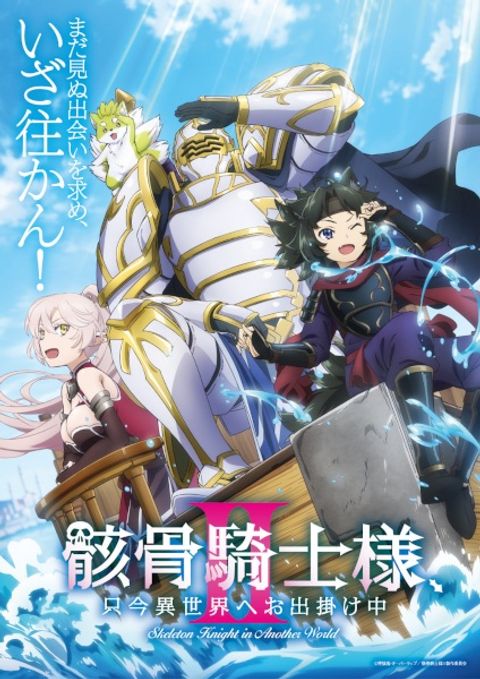
Death March to the Parallel World Rhapsody
 10
More DetailsRadar5
Choose what you want to review:
a single episode or the full anime.


