



Megalobox
Oshimeter
Synopsis
In a filthy, beat-down future where fighters strap on mechanical exoskeletons called Gear to hit harder, move faster, and put on a show, an underground boxer named Junk Dog is wasting his talent throwing rigged matches just to keep his sketchy manager fed. His problem? He's good, really good, but he's stuck losing on purpose with no way out. Then he runs into Yuuri, the undefeated champion of Megalo Box, and something clicks. Junk Dog decides he's done losing on purpose. He's going to enter Megalonia, the biggest tournament in the sport, and fight his way to the top, gearless, with nothing but his own fists and a fake ID. The whole thing is a love letter to Ashita no Joe, updated with a cyberpunk coat of paint and a retro animation style that feels pulled straight from the late '90s. It looks rough and textured in the best way. The hip-hop soundtrack ties everything together, giving the show this raw, street-level energy that never lets up across its tight 13 episodes. No filler, no wasted arcs, just a straight shot from the bottom to whatever's waiting at the top. If you liked Hajime no Ippo's underdog fights but want something grittier and more stylized, or if Samurai Champloo's aesthetic blend of old and new is your thing, this one's worth your time. It knows exactly what it wants to be and commits fully.
Episode Guide
Characters
Joe
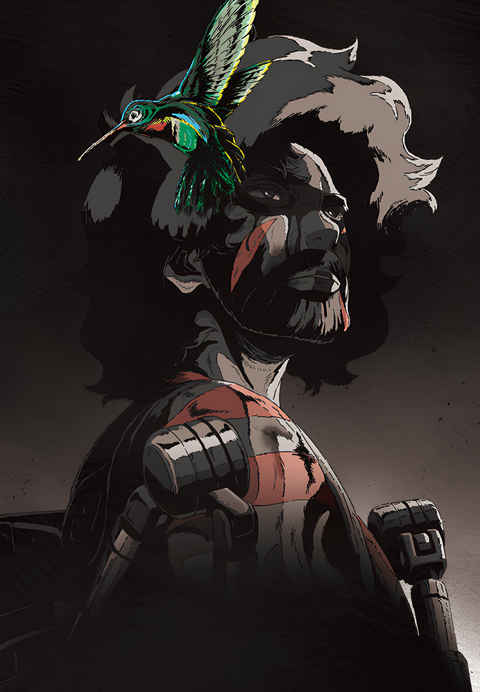
Underground Megalobox fighter, challenged to fight in Megalonia, later becomes Nomad.
Hosoya Yoshimasa
Community Feed
Loading…

Megalobox doesn't dawdle setting up its world: underground fights, a protagonist running fixed matches, a jump into legitimate competition. The efficiency is a strength but also a tell — Joe's arc from cynical grifter to someone who actually wants to win happens fast enough that a few of the turns feel asserted rather than earned. Still, the bones underneath (a washed-up fighter forced to figure out why he stopped caring) are sturdy enough to carry 13 episodes without padding, and the show mostly trusts that structure instead of stalling for time. This is where the show is at once strongest and most conventional. The gruff mentor, the promoter with mixed motives, the "prove your name means something" thesis — none of it is new, and the show doesn't pretend otherwise. What keeps it from feeling stale is restraint: the dialogue doesn't over-explain feelings, and the show is comfortable letting silence or a look do work that a weaker sports anime would hand to a speech. The clearest standout. Fights are staged with actual weight — footwork, fatigue, the way a punch changes depending on stance — instead of the usual shonen hand-waving. The rough, sketchy linework reads as a deliberate match for the grimy setting rather than a budget shortcut, which is a distinction plenty of "gritty" anime never quite land. The hip-hop-inflected score does a lot of the tonal heavy lifting, giving fights a different rhythm than typical genre bombast, and it's used sparingly enough that it never wears out its welcome. In-ring sound design — impacts, breathing, the crowd noise falling away at the right moments — is doing real work too. Megalobox isn't reinventing the underdog formula, and anyone who's watched enough boxing anime will call some beats early. But it's executed with more discipline than the premise promises — animation and sound are carrying scenes a weaker writing team would have needed dialogue to prop up. Worth watching for the fights alone; worth finishing for how deliberately it earns the ending.

That was intense. The anticipation in every move, the power they hold, and the pride they are holding to, all was just amazing. The fights were really something you could look forward to. It was good and enjoyable.
Dang! I think that’s the biggest twist ever! A literally jaw dropped moment. No fight and action scenes, just unexpected twists. And build up the tension and excitement for the next episode.
I think the animation improved, or is it just me? The effects were so clear and the colours really brightened and added uniqueness. It is also getting intense and I'm literally at the edge of my seat. This episode is so PEAK.
WOAH. I did not expect that from Nanbu. It was a rollercoaster ride! The fight was great. I like how they build up the tension. Focusing on each own technique and you can see the difference between them.
The machine system was so OP. I think I kind of see a pattern here during the action scene. I think it needs a different approach to make it interesting. Well, it was a good fight. The end was a cliffhanger though.
Literally jaw dropped by the bombshell. I think my head is going to explode from all the information. Big salute to Nanbu o7, number one old man! No action scenes but it’s really exciting.
That’s such a baddie song for starters. New characters introduced. And wow, i didn’t expect to see Joe like that, it was so funny. However, I kind of feel frustrated by the end of the episode. Hoping to see new light next.
Joe the ragebaiter king. Not gonna lie, I'm going to be pissed too. I enjoyed the action scenes, and you guys can look forward to it. Though I feel sad for Aragaki and it was a rollercoaster of emotion for me.
The background story was interesting and kind of dark. There’s a little bit of action and more on building up tension and dialogues. It’s kind of a tearjerker for me.
WOAH! Nice moves and techniques right off the bat. The tension kept me entertained the whole time. The action scenes were good, and I liked the animation details on the ring. Sachio is a godsent for them, i love every interaction with him.

The way the show handled that "no gear" moment really highlighted that Joe wasn't fighting to defeat Yuri, he was fighting to reclaim himself from a world that wanted him to be a product. Every punch thrown was like a dialogue about what it means to be alive.
It’s one of those rare episodes where the "vibe" is so thick you can practically feel the heat of the ring. Everything from the dialogue to the animation is firing on all cylinders to make this final push feel legendary.
The soundtrack is doing some serious heavy lifting here! I love how it can pivot from a dark, suspenseful vibe that makes your chest tight to a sudden "light up" moment that gives you a second of hope before the next blow lands.
The Metallica vibes are absolutely on point! That heavy, distorted rock energy perfectly mirrors the "heavy metal" clashes in the ring. It gives the whole fight an aggressive, raw edge that makes every landed punch feel like a sledgehammer.
The sheer mutual respect at the end of a fight that intense is the ultimate "Pride vs. Pride" payoff. It really shows that even in a world of machines and corruption, the human spirit is the only thing that can't be programmed.
The "Pride vs. Pride" clash in this episode was absolutely legendary. Seeing two fighters throw away any regard for their future just to prove a point in the present is the ultimate high-stakes drama.
The emotional fallout after a fight in Megalo Box is honestly where the show peaks. It’s not just about who’s left standing; it’s about that shattering of limits.
That fight was absolute cinema! After all the buildup, seeing Joe finally step into the ring and pit "flesh and blood" against pure machinery is the ultimate payoff. The way the show handles the machine vs. flesh theme isn't just about the scrap.
The "creepy" vibe at the start is such a mood—it’s like the show is trying to warn you that this isn't just a friendly gym session, it's a fight for survival. But once that soundtrack kicks in and you find the rhythm, it’s impossible not to ride the flow.
From the Same Universe
Fans Also Watch
Megalobox
 10
10More DetailsRadar5
Choose what you want to review:
a single episode or the full anime.


