





91 Days
Oshimeter
Synopsis
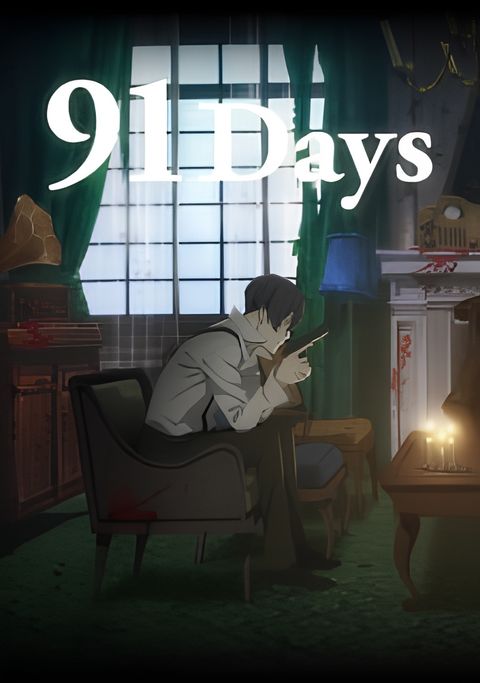
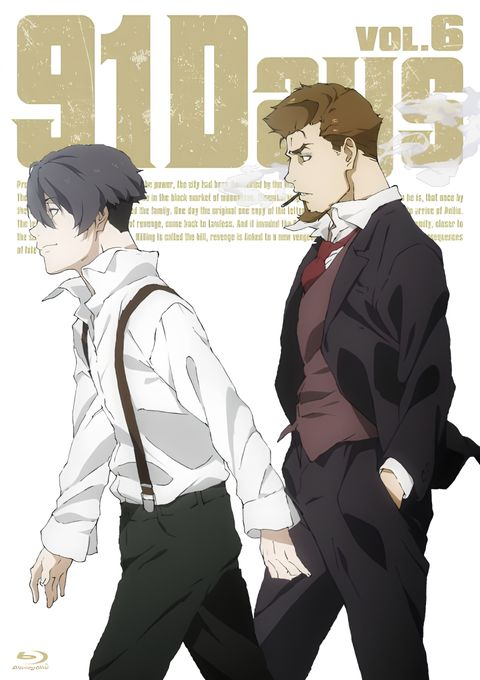
Angelo Lagusa is just a boy when he watches his entire family get gunned down by the Vanetti mafia. He disappears, changes his name to Avilio Bruno, and spends the next seven years doing nothing but surviving, until a mysterious letter arrives, pulling him back to the fictional town of Lawless during Prohibition-era America. His plan is cold and deliberate: befriend Nero Vanetti, the don's son, worm his way into the family that destroyed his, and tear it apart from the inside. This 12-episode TV series from Studio Shuka doesn't rush anything. It's a slow-burn revenge story where every handshake, every shared drink, every favor builds toward something devastating. The relationship between Avilio and Nero is the real core here: watching them genuinely bond while you know exactly what Avilio's endgame is creates this constant tension that never lets up. The show is honest about what revenge costs, and it doesn't flinch. The Prohibition setting feels lived-in, with bootlegging, turf wars, and backroom deals giving it an atmosphere closer to classic American gangster films than typical anime. If you liked Baccano! but wanted something less chaotic and more focused, or if Gungrave's themes of friendship and betrayal hit you hard, this covers similar ground with a tighter narrative. Fans of Black Lagoon's criminal underworld energy will feel at home too. It's bleak, it's deliberate, and it earns its ending.
Episode Guide
Characters
Angelo Lagusa
Seeking revenge against the Vanetti family for his family's murder, Angelo finds his purpose questioned after his quest concludes.
Berry Morgan
Nero Vanetti
Nero Vanetti, proud Vanetti son, upholds family honor, succeeding his father as Don, seeking to defend his family's legacy against rivals.
Moore Ian
Community Feed
Loading…

Of course its a test. It's brewing up to be Angelo's moment soon!
Decently surprise at how good it scales up in the final few episode. The ending was calm. Some would call anti-climatic. Tragedy but somehow hopeful at the same time, or more towards optimistic. There's so many ways to interpret the ending. It's a beautiful revenge but the satisfaction isn't the revenge, as revenge in the end is really frame as being pointless and the strength to move on triumphs.
Wait there's still one more episode? What's going on?
Boom! "Everything is going according to plan"
3 Months and everything's fucked. Stay away from revenge guys.
RIP Corteo Oh wait RIP Fango? Didnt expect that HOLY
Remember when i said Fango isn't crazy and he's just using it as a persona. Well Nevermind LEL
Fango is a funny guy lmao but looks like he's just using the crazy as a persona. Feels like he is a trustable person as long as he has nothing to lose and something to win.
They took a comedic approach to a hunter hunting them. Entire sequence this episode felt funky. But doesn't really progress the story anywhere. Not much emotional infused as well. Theres a dog who just lost its owner for god sake.
Nothing is hooking yet, maybe the show would be better off being a live action instead of...this
TK Opening was lit. Other than that...The pacing felt very slow. The revenge doesn't really evoke much emotions imo.
Very slow and very cold show. Characters are a bit non-chalant and confusing whether its trying to be realistic or not as none of them seem to have fear and are just acting like they are in a movie.

91 Days is an original Prohibition‑era crime drama that adopts a classic tragedy framework, chronicling Avilio Bruno’s calculated infiltration of the Vanetti mafia family to avenge the murder of his parents. Trading supernatural flair for a grounded underworld atmosphere, the series leans heavily into a bleak, noir‑inspired narrative of revenge. The pacing is uneven, frequently struggling with momentum. While gripping plot beats and bursts of violence keep the story tense, stretches of slow exposition and repetitive conversations often stall the progression of Avilio’s revenge. This stop‑and‑start rhythm makes the series feel inconsistent, even as it builds toward its tragic conclusion. Visually, Studio Shuka delivers a moody, atmospheric aesthetic. The 1920s Prohibition setting comes alive through washed‑out color palettes, period‑accurate wardrobe, and detailed urban backdrops that capture the grim, gritty nature of the underworld. The visual tone reinforces the noir sensibility, immersing viewers in the bleakness of the era. The writing is compelling in premise but occasionally predictable in execution. While the classical tragedy framework provides weight, some character turns and faction dynamics feel convenient rather than earned. This reliance on familiar crime‑drama tropes blunts the depth of the narrative conflict, leaving certain arcs less impactful than they could be. Emotionally, the series often feels detached. Despite its heavy themes of loss, betrayal, and obsession, Avilio’s cold, calculated demeanor keeps the audience at arm’s length. The tragedy resonates intellectually but struggles to connect on a visceral level, limiting the emotional punch of its darker moments. The soundtrack is a genuine highlight. Jazz‑infused compositions and evocative sound design anchor the 1920s mafia aesthetic, providing much of the tension and mood that scenes sometimes lack. The score elevates the atmosphere, ensuring the series maintains its noir identity even when the narrative falters. In the end, 91 Days is a stylish and ambitious mafia drama that succeeds on the strength of its gritty atmosphere and standout soundtrack. However, inconsistent pacing and a detached emotional core prevent it from reaching the upper echelon of crime thrillers. It remains a worthwhile watch for fans of noir‑inspired storytelling and mafia intrigue, even if it doesn’t fully capitalize on its tragic potential.

Cool anime with style 1920s, can wait the main plot

Episode ini berlatar belakang 1920 yg sangat khas dan dari segi plot awal sudah sangat menarik. Tidak sabar untuk menunggu kelanjutannya

It didn’t try to be dramatic in an obvious way. The pacing felt slower, but it worked because everything felt more intentional. The final moments hit more because of what’s not being said. I didn’t like that much is that it might feel too quiet for some people.
Things don’t feel controlled anymore, everything just starts breaking down fast. The tension is not quiet this time, it’s right there in every moment. Some scenes feel really heavy without needing much dialogue, and it makes everything feel more real.
Nero feels more intense here, and even the quieter moments don’t feel safe anymore. It all feels closer to breaking point. The tension doesn’t stay hidden as much, and you can see how things are starting to fall apart.
There’s less focus on big moments and more on the weight of small decisions. Nero’s unpredictability keeps scenes tense. Things feel like they’re getting more serious with every interaction.
Nero’s presence still changes the tone of every scene, while Corteo feels more careful, almost like he’s trying not to get caught in the middle of everything. There’s less noise, but more pressure in the way characters react to each other.
From the Same Universe
Fans Also Watch

91 Days
 10
10More DetailsRadar5
Choose what you want to review:
a single episode or the full anime.


