






I'm Quitting Heroing
Oshimeter
Synopsis
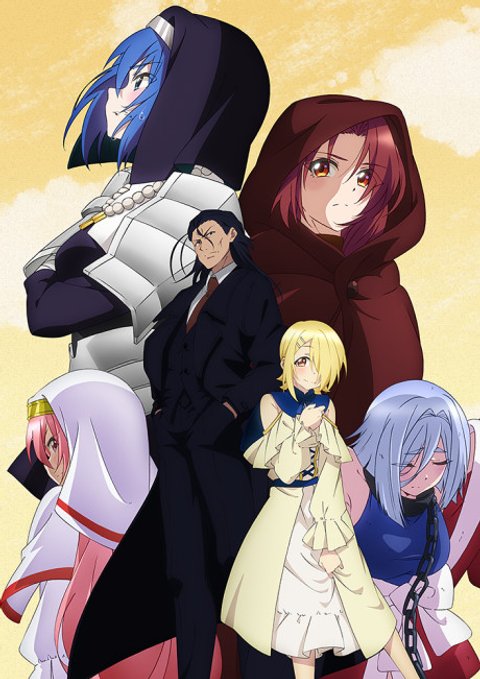
When Demon Queen Echidna begins her invasion of the human realm, the people turn to the hero Leo Demonheart to protect them. Blessed with insurmountable power, Leo easily repels Echidna's army, thereby saving the world. But instead of gratitude or admiration, Leo is met with disdain and scorn from his fellow humans, who fear his overwhelming strength and believe that it may eventually cause humanity's demise. Banished from the kingdom he once called home, Leo wanders aimlessly throughout the land until, one day, he hears rumors of Echidna's efforts to rebuild her army. Hoping that demonkind might accept him as an ally, he returns to the demon queen's castle and offers Echidna his help. Naturally, Echidna immediately rejects him. Still, not all hope is lost, as Leo manages to convince Echidna's four generals to let him secretly work under their supervision. Donning the identity of a masked dark knight named Onyx, Leo solves the demon army's problems one by one—gradually improving the quality of life around the castle. Above all else, however, Leo wants to accomplish one goal: to learn why Echidna started the war in the first place.
Episode Guide
Characters
Leo Demonheart
3000-year-old exiled hero, Leo Demonheart, seeks to rebuild the Demon Lord's army.
Daniels Joe
Community Feed
Loading…

I go into the series expecting a goofy fantasy comedy about an overpowered hero joining the demon army, and at first, that's exactly what it looks like. The protagonist is the strongest hero in history, saves humanity, and does everything expected of a hero. The problem is that humanity is now scared of him. Instead of being celebrated, he's treated like a threat because he's too powerful. After being rejected and left without a purpose, he does something ridiculous: he applies for a job with the Demon Army he just defeated. That premise grabs me. It's funny on the surface, but underneath is an emotional story about loneliness, purpose, identity, and figuring out who you are when the one thing you're good at is no longer needed. The Workplace Comedy The first half is a fantasy workplace comedy. The protagonist joins the Demon Army and helps the Demon Queen and her generals with management, logistics, and teamwork—essentially The Office in a fantasy setting. That setup gives the show charm. The Demon Army isn't a generic evil organization; the characters have normal problems, insecurities, and leadership struggles. The protagonist functions as a corporate consultant, and I enjoy the contrast between his ridiculous power and ordinary problems. The downside is the middle can feel slow. Some episodes feel like he's solving one workplace problem after another without much movement in the larger story. Still, these interactions build his relationships and become more important as the story develops. The Main Character The protagonist is easily the strongest part of the series. At first, he comes across as ridiculously confident and unbeatable, but the longer I spend with him, the more that confidence starts to feel different. He isn't just powerful; he's spent an incredibly long time being useful. His entire identity revolves around being a hero—fighting, protecting people, and being needed are all he knows. Once that purpose disappears, he has no idea what to do with himself, making him relatable. He can fix almost every problem around him, but fixing himself is different. His constant need to work and help others gradually feels less like kindness and more like a way of avoiding what he actually wants. The Demon Queen and Generals The Demon Queen is another strength. She's not a stereotypical evil ruler; she's trying to lead a struggling organization and has weaknesses of her own. Her relationship with the protagonist works well because neither understands the other at first, providing comedy while developing into something more meaningful. The Demon Generals also make the workplace concept work. Each has a different personality and problems, giving the protagonist new ways to interact. Their relationships help show him experiencing connections not based entirely on being a hero. The Tone Shift This is where the series becomes much more interesting. The show spends much of its runtime as a lighthearted workplace comedy before revealing that the protagonist's situation is more complicated. The story becomes serious and focuses on his history, identity, and emotional struggles, raising a central question: What happens to someone whose existence is built around being a hero when there is no longer a world to save? The transition can be abrupt. The comedy episodes and darker material sometimes feel like two different shows. If I enjoy the comedy, the serious portion can feel heavy, while anyone waiting for drama may find the first half slow. Themes, Pacing, and Production The series explores mature ideas like identity beyond usefulness, the burden of power, burnout, leadership, and the nuance of the human-demon conflict. Pacing is my biggest issue, as early episodes feel repetitive while later drama moves faster. Visually, the anime is fine—the character designs are clean, but the animation rarely stands out, and the action is functional rather than impressive. The soundtrack does its job, while the voice acting is stronger, especially from the lead, who balances confidence, humor, exhaustion, and vulnerability well. Emotional Impact and Final Verdict The emotional side is where the anime surprises me most. The protagonist's loneliness becomes the emotional center of the story. The series understands that being needed isn't the same thing as being loved; he can save the world and still feel lost while solving everyone else's problems but not his own. I’m Quitting Heroing is better than its premise makes it sound. The protagonist is the biggest strength, while uneven pacing, tonal shifts, and average animation hold the series back. Still, the emotional ideas make it worth watching. What starts as a funny fantasy workplace comedy becomes a thoughtful story about finding purpose, building connections, and realizing that being useful isn't the same as having value.

The last episode is finally done. In my opinion, it was a good ending. It met the expectations I had for the ending of this anime. It had a lot of emotions until the end. The Demon Queen doesn't deserve the title at all. She should be an Angel Queen 🤣. I also love how the generals and the Demon Queen now know how to communicate with their subordinates, have teamwork, and help them with the things that need to be done. Anyway, it's a great anime and worth watching.
We are near the end of the anime. This episode focuses on what's on the MC's mind and what happened to him in the past. Seeing the MC alone for all those years is kinda sad. The comedy ends, and now we are on to the serious part of the anime. You can totally see how they built up all the episodes just to make the ending a good one.
Wow, cliffhanger it is 🤣. The way the MC solos everyone shows how OP he is in this episode. The episode is great and has a lot of battle scenes that were not shown in the early episodes. It's like the early episodes were all buildup for these later episodes. You can really feel the emotions in it. The comedy ends now and shifts into the serious part of the anime.
Oh my gosh. What a twist. This anime always makes unexpected twists that are hard to predict. I think that's one of the reasons I got hooked on this. This episode also flows really well, and the pacing is great so you will not get bored. Also, I guess we now know why the MC is so strong, because of how he is able to adapt to everything.

In the final episode, heroism is not about stopping action; it is about deciding what cause to champion next. Often, the greatest courage lies in fostering peace, one document at a time.
Episode 11 functions as an ideal second‑to‑last installment. It takes its time with the climax, earning it. The episode rewards those who are patient, attentive, and emotionally invested. It is more than just excellent anime—it exemplifies outstanding storytelling.
Ohhh, so that's how it is. Knowing about the MC's past answered a lot of questions. I thought at first this was an isekai cliché thing, but it is not at all. This episode focuses more on the MC's past and how he met his friend and how it changed his way of life. The ending song is also different from before.
Episode 10 is a prime example of anime storytelling at its best: action with heart, spectacle with substance, and a climax that truly earns its tears.
Episode 9 skillfully blends exposition, feeling, and rising tension. At times, the most courageous gesture is not a weapon but an outstretched hand—and the bravery to believe it won’t be severed.
This episode is so hilarious 🤣🤣🤣. The script they used to convince Edvard is too cringey, which makes it even funnier 🤣. At least it solved the problem they had. Anyway, this episode focuses more on Edvard's character development and the Demon Queen blowing off some steam 🤣.
Woooah, what a twist. This episode makes the anime even more interesting to watch. The mysterious aura surrounding the MC is finally unveiled here. This episode focuses more on the MC's past, and it turns out to be quite a good one. This anime is also quite different from other OP MC anime. While others focus mainly on battles, this one focuses more on the character development of the characters around the MC.
This anime is good and different from what you usually see in the fantasy genre. It focuses on the MC's capabilities and how he helps others improve and become better at what they do. Like in this episode, where the MC helps Mernes learn how to communicate better. It's not just Mernes who learns from it, but the viewers as well, making it a pretty good lesson on communication.
That timing at the end though, what is wrong with her subordinates? 🤣 Anyway, Episode 4 is also quite good. We finally discover the Demon Queen's true reason for invading the human world. The Demon Queen also has a cute aura around her, and it suits her character perfectly.
Episode 3 is also a good one. This episode focuses on teamwork and how to work efficiently. The way Leo plans for Lily to think more maturely is quite hilarious. Also, it's great to see the character development of the people around the MC progressing well, making it easier for them to rebuild their place.
Episode 2 is a good one. It focuses on maintaining and rebuilding what has been lost or destroyed. The MC also thinks logically instead of just going around and flexing how strong he is. The comedy is good as well, and the story progresses nicely. Having the MC by Shutina's side definitely reduces her workload a lot, even though he looks like he's just relaxing the whole time 🤣.
Although Episode 8 includes only scant present‑day framing, its emotional impact is tremendous. It rewards patient viewers with rich character depth and considerable philosophical weight.
Episode 7 functions as an in‑depth look at leadership set against a fantasy‑action backdrop. The emotional payoff and the tactical execution greatly improve the overall experience. This instalment marks an essential phase in the army's reconstruction storyline.
Episode 6 deftly mixes grand world‑building with personal character growth. Few anime manage to turn exposition into an emotional release.
Episode 5 quietly succeeds, demonstrating that character development can be just as engaging as any battle. By emphasizing dialogue, mental well‑being, and mentorship, the episode blends humor and emotion with impressive elegance.
I'm Quitting Heroing
 10
10More DetailsRadar5
Choose what you want to review:
a single episode or the full anime.


